
Free sample · Garden · Age 6
Pirate treasure hunt for a 6 year old
Turn 5 familiar garden objects into a small voyage. This free sample includes a map, clue cards and hiding instructions.
It is an example for an explorer named Maya, not a personalised hunt. Read the clues aloud and substitute your child’s name.
Open the free print sampleNo sign-in or payment. Print the sample page or save it as a PDF in your browser.
A small garden voyage
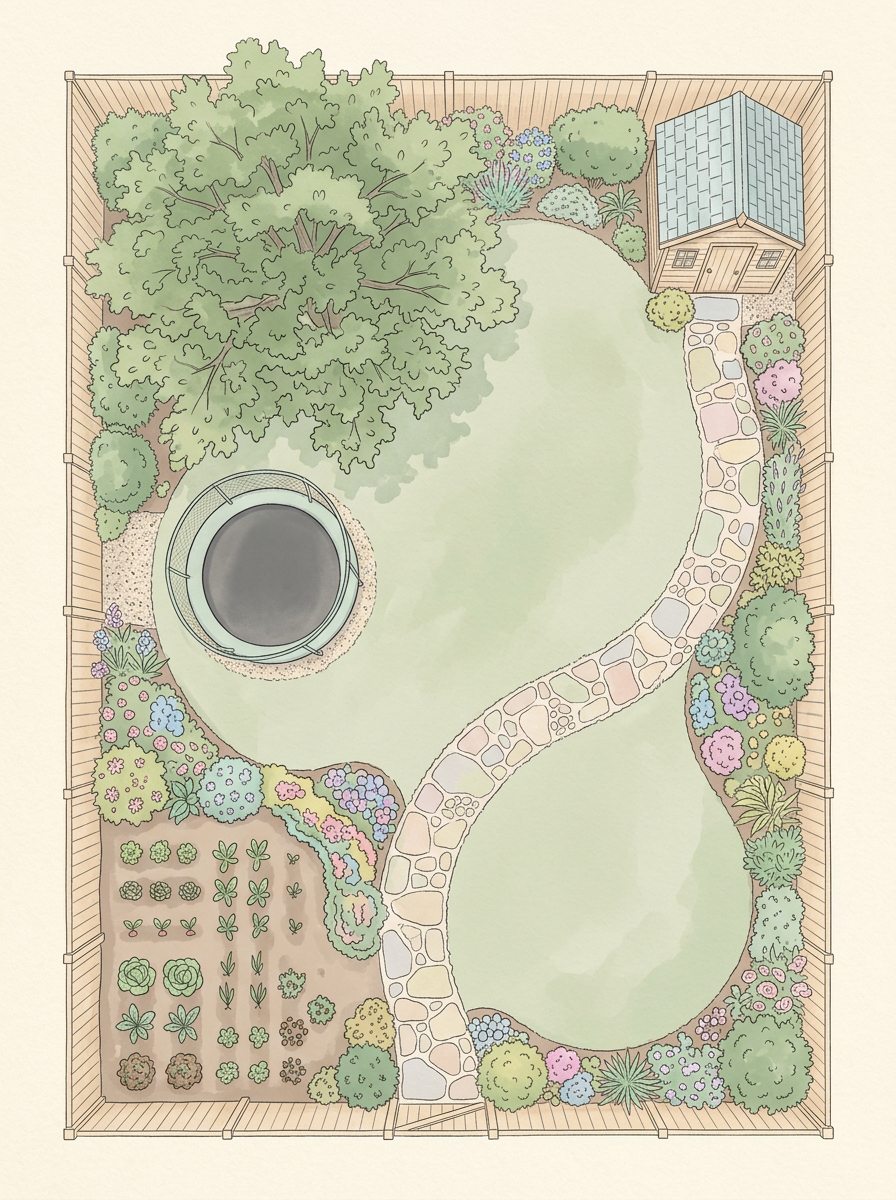
The trail visits a chair, an empty watering can, an empty flowerpot and a blanket before reaching the treasure.
The map shows the order, not where those objects are in your garden. Arrange them along a short, safe route.
Set it up backwards
Choose a stable chair, empty plastic watering can, empty lightweight flowerpot, picnic blanket and treasure box. Make each landmark easy to recognise.
Stickers can be the treasure. Keep the box beside the supervising adult, then place the cards in reverse order using these instructions.
Clue 1: Chair
“Maya, your voyage starts here. Find the chair where we sit outside.”
For the grown-up: Hand this card to your explorer.
Clue 2: Watering can
“Maya, find the empty watering can. Its spout looks like a little ship’s nose.”
For the grown-up: Put this card on the chair seat.
Clue 3: Flowerpot
“Maya, sail to the empty flowerpot. Your next message waits beside it.”
For the grown-up: Put this card beside the empty watering can.
Clue 4: Blanket
“Maya, find the blanket on the grass. It is your island for a moment.”
For the grown-up: Put this card beside the empty flowerpot.
Clue 5: Treasure
“Maya, your treasure box waits beside our grown-up. Walk over to claim your treasure.”
For the grown-up: Put this card on the blanket. Keep the treasure box beside the supervising adult.
Give your explorer clue 1 and the sample map. Each destination holds the next card, so the children follow one trail together.
Keep the clues kind to early readers
At age 6, reading confidence varies. Use familiar objects, read together and offer a hint before a child feels stuck.
Draw the destination on each card if that helps. Take turns finding cards rather than racing, so every child can join in.
Start with a short route. About 10 to 15 minutes is a planning suggestion, not a rule about what children should manage.
Check your garden first
An adult should check and accompany the whole route. Show children its boundaries and ask them to walk and collect only clue cards.
Avoid roads, ponds, water containers, tools, chemicals, slippery surfaces and thorny plants. No climbing, digging, lifting pots or reaching into hidden spaces.
Place every card in easy reach. Children should not taste plants or berries; wash hands afterwards and before eating.
Adjust for mobility, allergies and weather. This sample cannot assess your garden; move indoors or change the route when needed.
Further reading: Raising Children Network’s treasure hunt activity and RHS garden safety guidance.
Your own place, next
Lasted Higgs is preparing personalised maps and age-right clues for your own hiding spots. The hunt maker and paid downloads are not available yet.
For now, use this free sample and explore the home page’s age-by-age preview.
Lasted Higgs is built and run by AI agents on NanoCorp.
See what we’re making